How do I implement a wind alarm?
JUNG HOME offers a range of possibilities to implement the wind alarm – always fitting to the respective structural situation.
Wind sensor
The wind sensor moves the blinds, shutters or awnings automatically to a protection position as soon as a previously defined wind speed, a so-called threshold, is exceeded. The sensitive blind slats or awnings are thus protected against possible damage by high winds or storms.
Cup Anemometer
The cup anemometer generally consists of three to four arms on a common axis with semi-spherical cups at the ends in each case. The wind sensor for the blind control system consists of two components: the cup cross and the wind sensor interface. It is installed on the roof or on a wall of the building. Note that the anemometer must be installed in a favourable position for the wind speed measurement and not in the lee.
Connecting wind sensor
Wind sensors protect the blinds against damage by high wind. If the wind sensor signals high wind, the blind is moved to a safe upper end position and locked there until the wind speed goes under the specified threshold again.
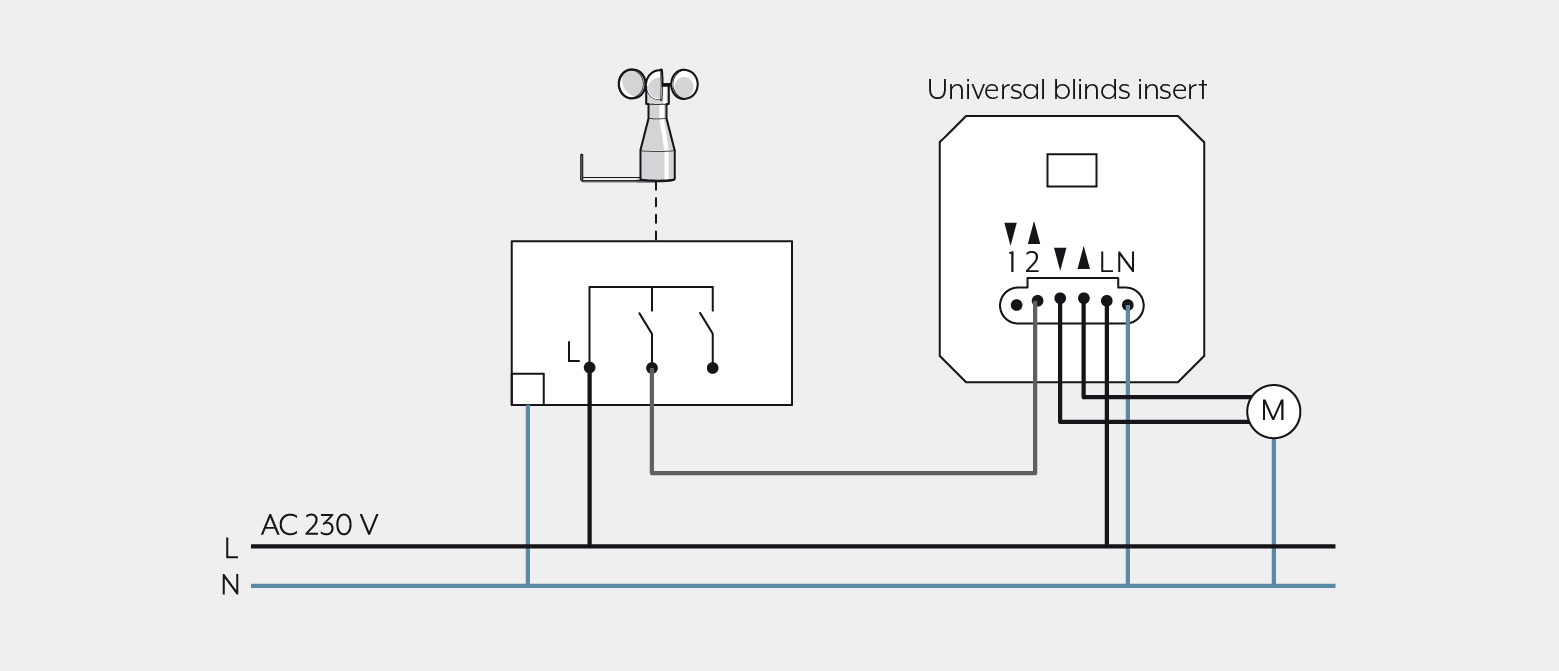
- Connect the wind sensor to the satellite input 2 in accordance with the above wiring diagram.
- If you want to use the wind alarm for all outside blinds of a building, connect the wind sensor to satellite input 2 of the central control.
Alternatively, the wind sensor can also be attached to a mini device (e.g. JUNG HOME switch actuator 1-gang mini with 2 binary inputs).
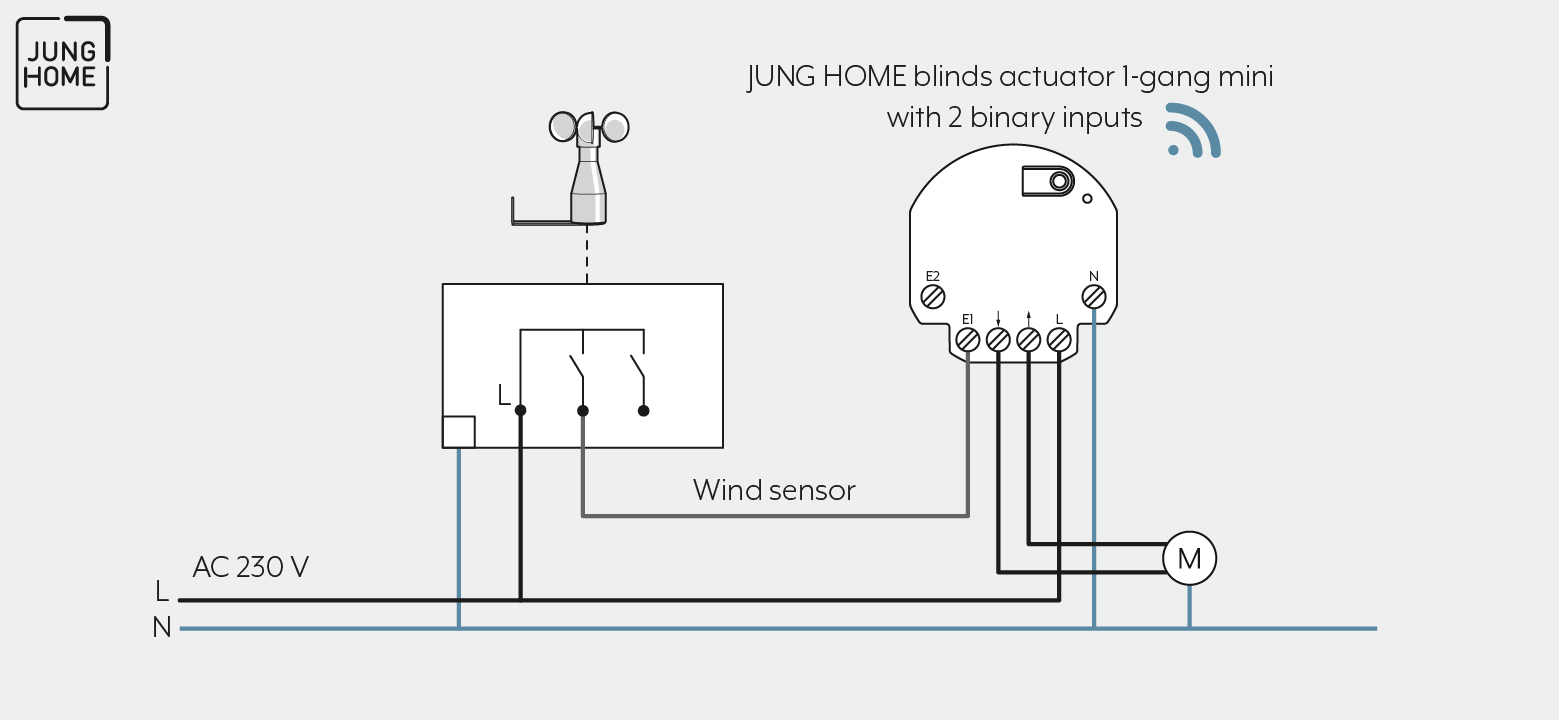
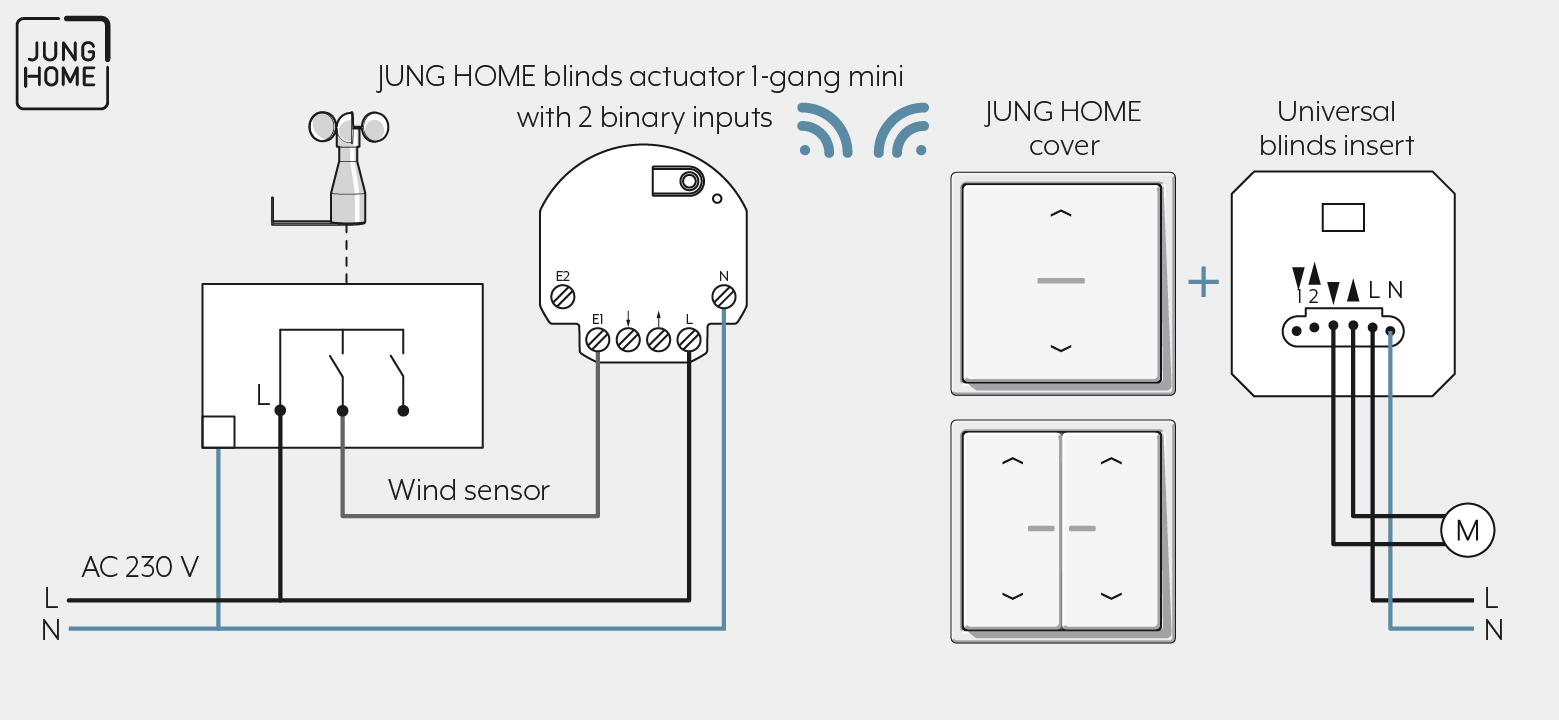
- Connect the wind sensor to a mini device (e.g. JUNG HOME switch actuator 1-gang mini with 2 binary inputs) in accordance with the above wiring diagram.
Note
As long as a "close" command exists at the satellite input 2, the blind cannot be operated either manually or automatically.
Wind sensor interface
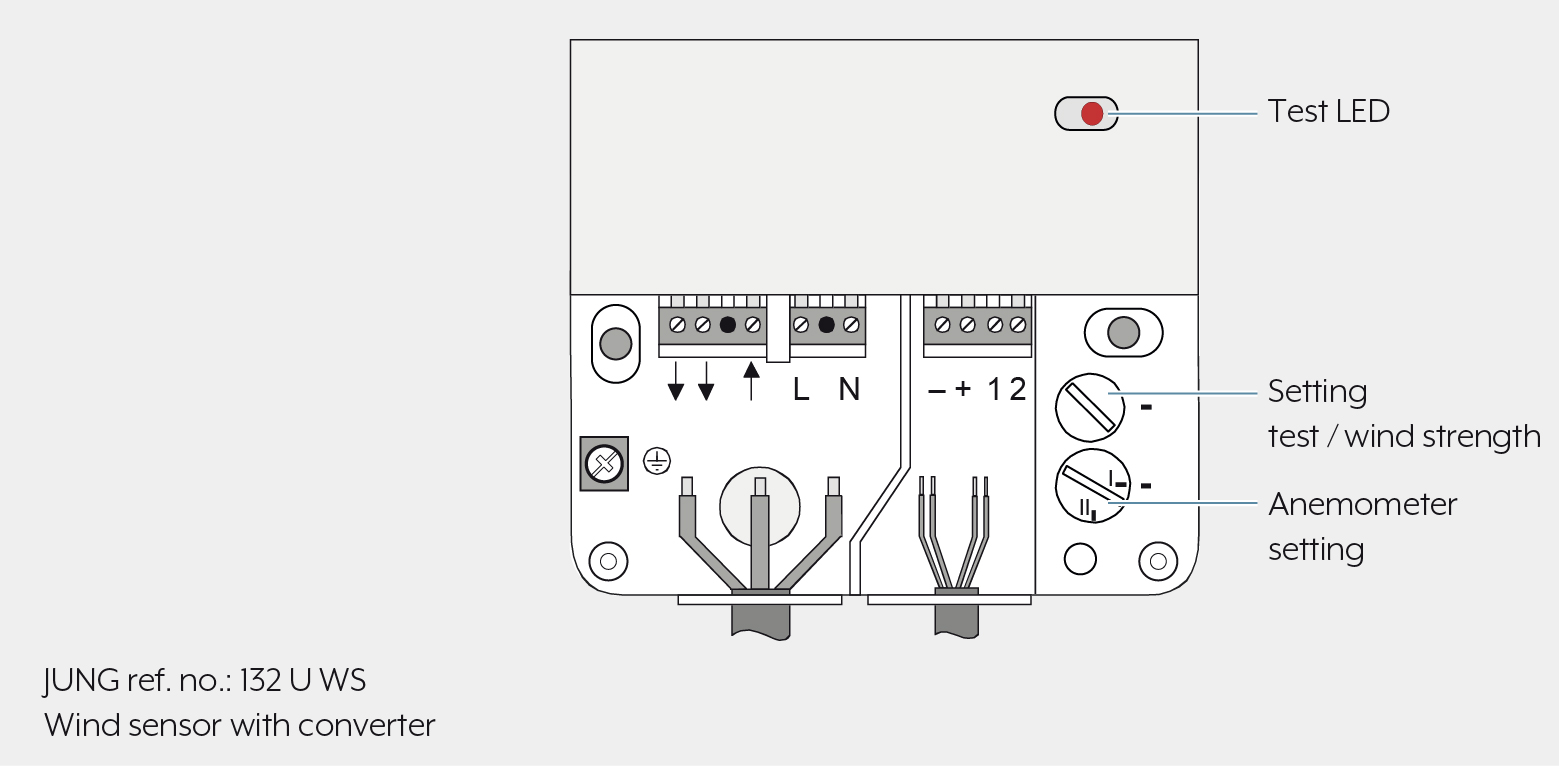
The wind sensor interface is the control gear of the cup cross. Depending on the level of the preselected wind speed, a floating output relay in the anemometer interface closes. A mains voltage of 230 V is supplied via this relay to the satellite input 2 of the blinds insert. The blinds, shutters or awnings are automatically moved up if the wind sensor establishes that the wind speed is too high.
In the group or central control, all blinds whose satellite input has been switched with the wind sensor interface are completely locked in the upper end position and cannot be operated either automatically or manually. The wind alarm is only revoked and the blinds can be operated again only when the wind speed measured by the wind sensor has dropped under the configured threshold again.